Why Your Brain Needs Dance
Your brain needs dancing like it needs oxygen. It's the only physical activity proven to reduce dementia risk, and it works whether you're protecting healthy function or recovering from injury. Dancing engages your entire brain in ways nothing else can match - prevention and rehabilitation wrapped in rhythm and movement.
How It Actually Works
Dancing activates your whole brain simultaneously. Left hemisphere handles rhythm and sequencing whilst right hemisphere processes spatial awareness and creativity. Your motor cortex coordinates movement, your cerebellum fine-tunes balance, your limbic system generates emotional response - all firing together, strengthening connections between regions with every step.
This whole-brain workout triggers BDNF production (brain-derived neurotrophic factor) - essentially fertiliser for neurons - promoting new neural pathway growth and reinforcing existing connections. Cross-lateral movements strengthen communication between hemispheres through your corpus callosum, the information superhighway linking left and right brain. You're not just moving your body. You're rebuilding your brain's infrastructure.
TRY THIS
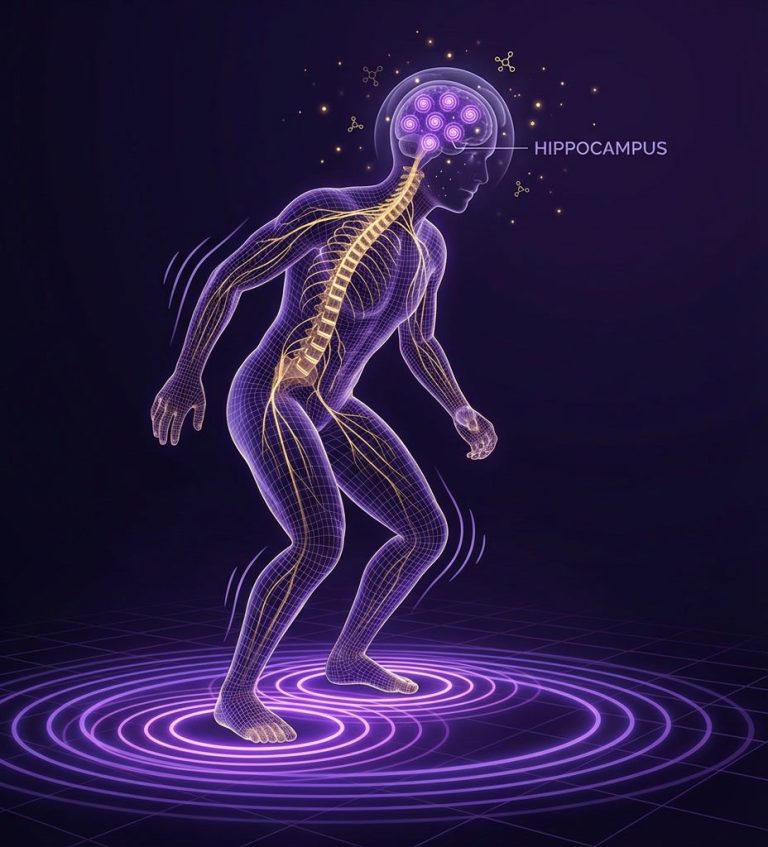
Rhythmic bouncing/grounding through feet
MOVE:
Drop into a gentle bounce - knees soft, weight shifting through your feet into the floor. Feel that repetitive, rhythmic compression?
WHAT THIS DOES:
- Theta waves: Your hippocampus produces theta rhythms - your brain's fastest learning state
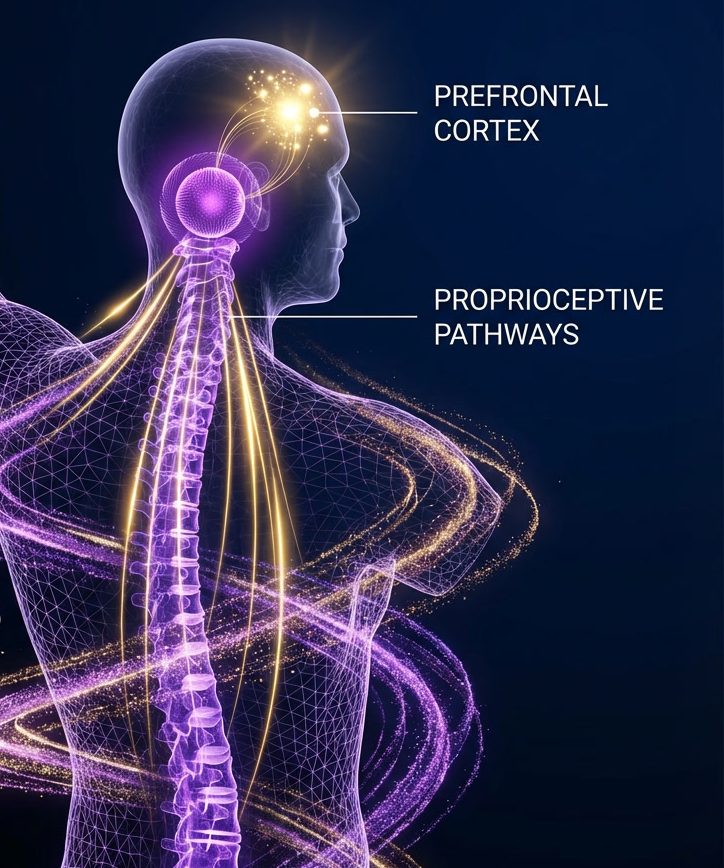
- Safety signals: Rhythmic pressure sends continuous messages up your spine telling your brain "we're safe, grounded, moving with purpose"
- Serotonin release: Floods your system, protecting against depression whilst enhancing cognitive function
Prevention & Rehabilitation
Regular dancing builds cognitive reserve - your brain's backup system against decline. Studies show it maintains brain volume, enhances executive function, and protects memory. You're essentially banking neurological resilience for whatever comes.
After brain injury, dancing's impact becomes even more profound. Research demonstrates considerable acceleration in rehabilitation for severe traumatic brain injury patients after just four months of weekly sessions - improvements that remained stable for years. Parkinson's patients bypass damaged brain circuits during dance, moving with fluidity that medications alone cannot provide. Stroke survivors regain coordination and balance through rhythmic movement therapy.
Why does it work when medications can't? Dancing restores connectivity. It rebuilds the default mode network - your brain's baseline resting state - and strengthens communication pathways that pharmaceutical interventions cannot reach. You're giving your nervous system the template it needs to rewire itself.
TRY THIS
Spiral/rotation through spine
MOVE:
Twist your torso - let your spine spiral like wringing out a towel, ribs rotating one way, hips anchored. Feel those fascial sheets sliding across each other?
WHAT THIS DOES:
- Fascial activation: Thousands of nerve endings fire, releasing hyaluronic acid - your body's natural lubricant - keeping everything sliding smoothly and essential for joint health
- Cerebellar processing: Your brain's control centre cross-references the spiral with balance, spatial awareness, and emotional state
- Your brain's control hub: Activation directly influences emotional regulation including threat response, decision-making, impulse control, organisation and planning
TRY THIS
Synchronised group movement
MOVE:
Move in sync with others - same rhythm, same beat, bodies matching. Notice how your awareness shifts?
WHAT IT DOES:
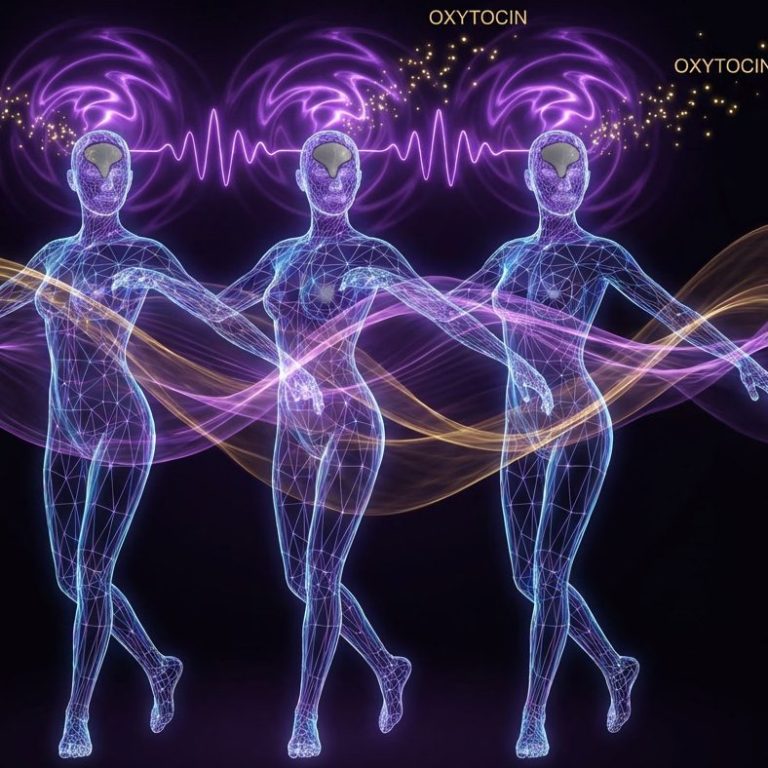
- Inter-brain synchrony: Your brain waves literally synchronise with people around you - measurable, identical neural firing patterns
- Oxytocin flood: The bonding hormone releases throughout everyone's system simultaneously
- Threat response quietens: Your amygdala ( dims, your self-obsessed default mode network dissolves - you're not separate individuals anymore, you're a unified nervous system